Showing posts with label Gothic Novel. Show all posts

Monday, August 22, 2016

"I have heard a tale of horror"

Eh.... Not really.

Okay, Matilda, I did forget you. And I remember why I didn't finish this novel. Because after the horrors of the castle, it gets boring.


After the whole Gossip Gothic thing they go to England and the Marquis settles it with Uncle/Not-Uncle Weimar that Matilda has a year to find her parents before he can carry her away. And everyone settles down to happiness and so forth.

The Countess Wolfenbach managed to escape being kidnapped (like Joseph because a fortuitous carriage of nobles just happen to be randomly travelling through this out of the way woodland and just happens to see her and stop. It's amazing how many nobles go through this place.
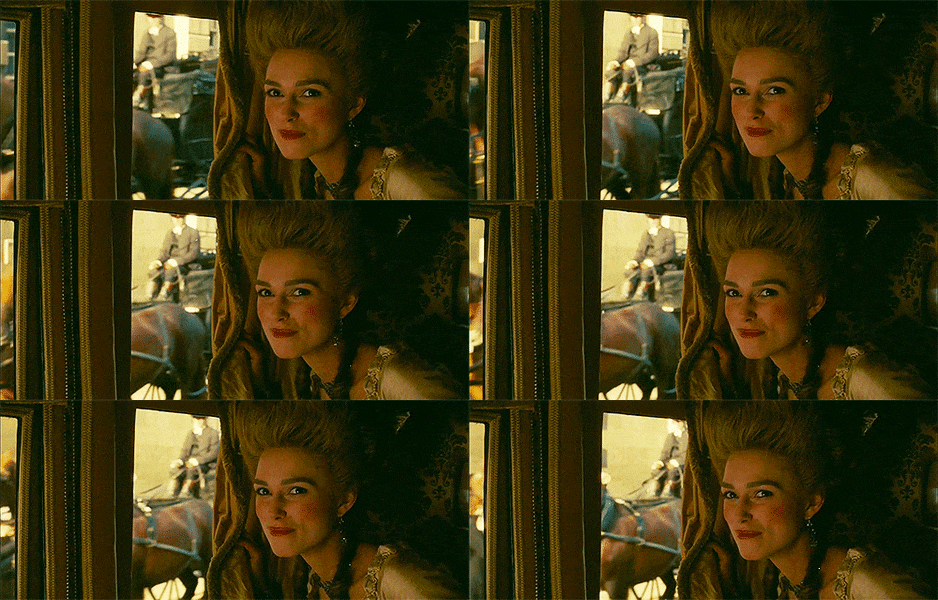

And the Countess manages to find Matilda and company in England and they all settle down to "the delights of love and friendship, in little excursions round the neighborhood, and in viewing the delightful prospects the Surrey hills afforded them. 
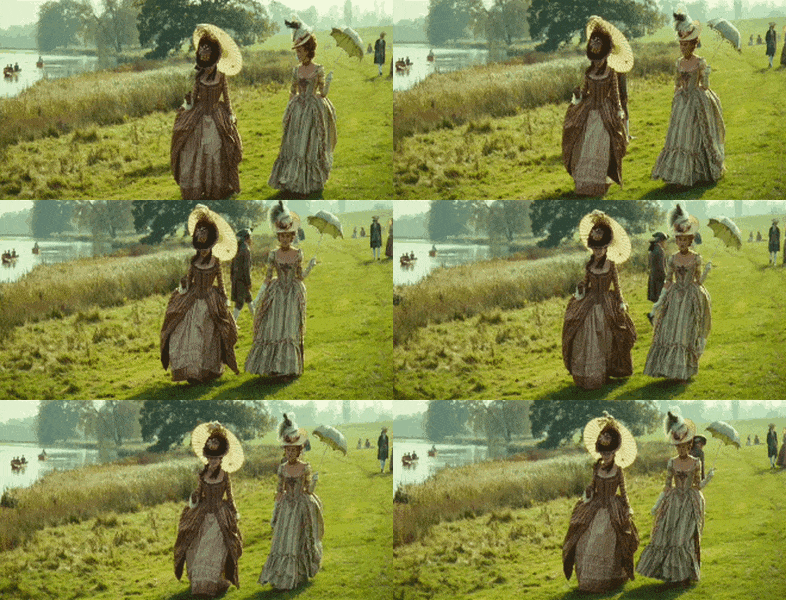

We finally learn the Countess's story. She was forced to marry Count Wolfenbach but her heart loved another man, a poor chevalier. 
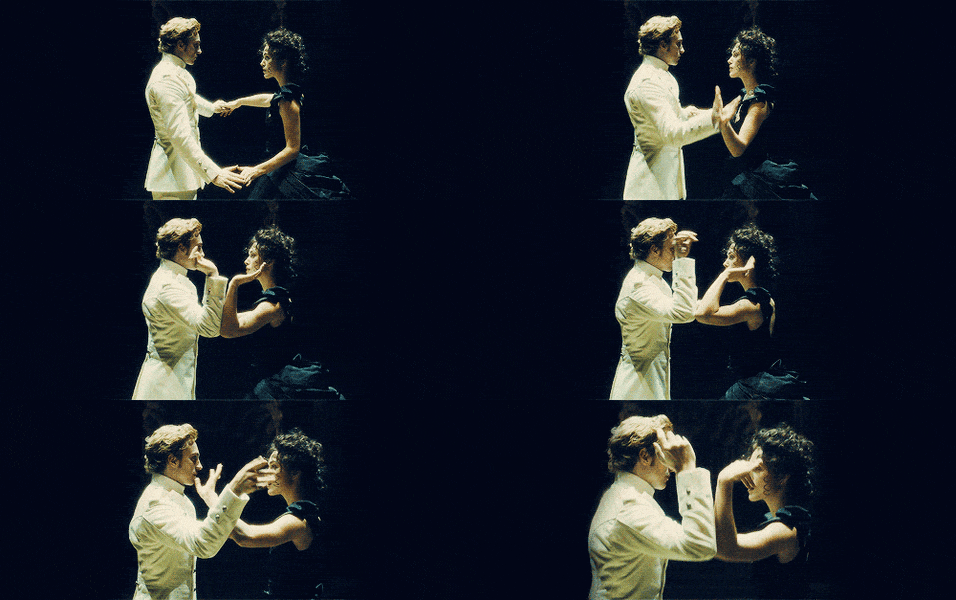
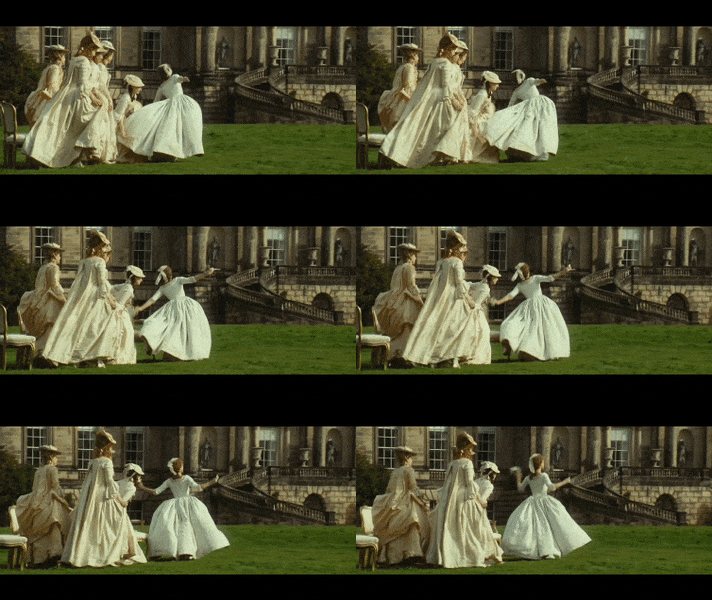
What is with their arm movements here?

He did ask her father for her hand in marriage, but he didn't have the title, the position, or the money. So she was forced to marry the evil count. He's the jealous sort and takes her off to the secluded country. But the chevalier won't give up and finds her. He slips a note through her window and she rebukes him, tears it up and tells him to go away.


But he won't. The Count discovers him, refuses to believe that she wasn't a part of it. Violence ensues and the Chevalier is murdered.
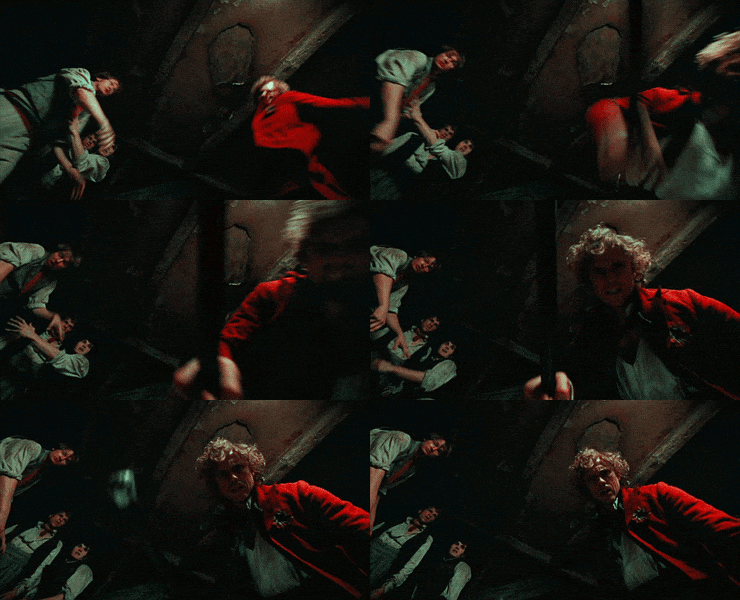

The Count takes the Countess's baby (oh, yeah, she was pregnant) and locks her away in Castle Wolfenbach with two attendants (Joseph and the woman murdered in the kidnapping). He says if she tries to escape or tells anyone anything that he will harm the child, so she swears, "taking a solemn oath, with the sacrament, that without [the Count's] permission [she] will never reveal" the murder or mention the Chevalier or contradict the Count's report that she is dead. Because, the Count says, "I prefer revenge to my own quiet; because I will be feared, and make your destiny hand on my pleasure." To keep the child safe, she agrees.

Dammit, now I will have that song stuck in my head all day.

Then Matilda shows up, the Count hears word of it, assumes the Countess broke her oath, and hence the kidnapping, etc. Which get's us to where we were in England all happy and having fun.

Aaaaand this has now lost all gothic and horridness. 



It is among the novels Isabella recommends to Catherine in Northanger Abbey. Catherine even asks, "but are they all horrid, are you sure they are all horrid?" Isabella assures her they are. 


Ah well. Not Isabella's worst crime as a friend and we'll hope the other recommendations are better. Anything called Necromancer of the Black Forest does have to be truly horrid, doesn't it?

I digress. To further the plot Parson's needs Matilda to get away from all the fun and protection in England. So Matilda decides that she is miserable.


She goes off to a convent in France and now out of the Marquis's protection, Uncle Weimar breaks the year long restraining order that was in effect in England and spirits her away. Because who didn't see that one coming?


The Countess's problems are all solved when Count Wolfenbach suddenly gets ill and on the verge of dying is gripped with remorse and confesses everything.

He explains he was a man obsessed with her and full of jealousy and love and that is why he made her life a hell and murdered people. He asks her forgiveness. She forgives him and he dies, telling her what happened to the child.

Meanwhile Uncle Weimar takes her across the sea, where they are beset by pirates. He tries to kill her and then himself as the ship is boarded (can't blame him, pirates were not good and what they were going to do to people captured was going to be horrific). But he fails and it turns out the pirates who have captured them just so happen to be good pirates, who impressed by Matilda's countenance, decide to help her.


Uncle Weimar, believing he is dying from the wound he gave himself as they were being boarded, then is filled with remorse and confesses everything. Because, hey, why not use it twice in one book? (Turns out she was absolutely right about what he meant by going into her room at night and making himself "happy.") He begs forgiveness. Matilda forgives him everything. (Honestly, by the end Matilda and Co. were so virtuous that I hated them.)



Incidentally, Uncle Weimar doesn't die, but still filled with remorse goes to become a monk. Turns out that Matilda comes from Italian nobility and is therefore able to return to her friends. She meets her mother. The Countess meets her son. Various people get happily coupled off and married. Everyone faints a lot.



It's too bad. It started out so well, with every proper cliche and a lot of fun. Then it lamed out like a Stephen King novel.



But for the next book, I am straying from Isabella Thorpe's recommendations and reading what is considered to be one of the most frightful and atmospheric books of all time.
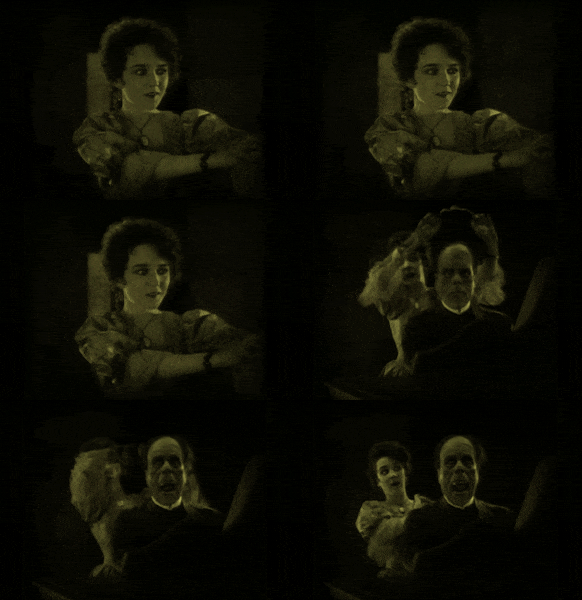

Fainting fit count: 18

Wednesday, April 20, 2016

"a swarm of beaus surrounded them"

PARSONS, YOU ARE DOING IT ALL WRONG!!!!!
       YOU COULD HAVE BEEN HERALDED AS THE MOTHER OF CHICK LIT!!

                Instead it goes to Jane Austen.


But I'll get to that in a bit.

Matilda gets to Paris and is warmly welcomed by the Marchioness and her husband. She learns that the mysterious kidnapped lady's name is Victoria--writer of bad poetry on walls-- and she "starts suddenly on hearing the name" because that was a big shocker.


Matilda breaks the news that said Victoria has been kidnapped. But Matilda, "Perceiving the agitation and distress of her auditors," says, "I have little doubt of the poor Lady's safety, from a persuasion that if any ill was intended towards her, they would have destroyed her as well as the servant." And this oddly does give the Marquis and Marchioness comfort, with the Marquis actually thinking of doing something for the poor victim. "By heavens! neither oaths nor promises shall prevent me from publicly calling on the Count to produce her!"

But otherwise things are going very well for Matilda. The Marchioness is immediately convinced that Matilda is wonderful because Matilda is pretty. Really. "That countenance needs no recommendation." The Marquis also loves her immediately for being pretty saying she "claims a double share of my esteem from her own merit, legible in her countenance." In fact everyone in the novel is just immediately convinced Matilda is wonderful just by looking at her. Among the many gifts Matilda is always thanking Providence for she should add thanks that she doesn't have a bad case of adolescent acne.

And then they all go off and take a nap. For the next few days they take her around Paris and show her the sites and introduce her to society. This is where Helen Fielding would have had a field day. A whole novel just on these three days.  Matilda has been sheltered from society her whole life. She's never done any of this before. And she's uncomfortable with suddenly being a part of it.

This is rife with possibilities. Instead Parsons passes this opportunity by with one line. "Matilda was in a new world: the polite and sensible conversation she now enjoyed was so different from every thing of thi kind to which she had been accustomed, that she was mortified at her own deficiencies, and most assiduously endeavoured to profit by the good sense and elegant manners of her protectoress." If she'd just spun that line into a few chapters, or maybe its own book, more people might know her name alongside Jane Austen. But Parsons is busy with other things. She has a message.
BOYS DROOL, GIRLS RULE!

Wait what?

Men aren't really in the picture. Except for the Marquis, no other man is mentioned and he barely gets to speak. This is no good. Doesn't Parsons understand what is supposed to be important to a woman?


She doesn't.

Matilda and the Marchioness go to an assembly where Matilda does not meet or dance with any men. Mrs. Bennet would be beside herself with disappointment.

But then the Marchioness isn't even trying!! She only introduces Matilda to other women! How is she ever going to marry the girl off like that? But no. Instead she focuses on especially calling Matilda to the attention of the Countess De Bouville and her daughter Adelaide, and Madame de Nancy and her sister Mademoiselle De Bancre.

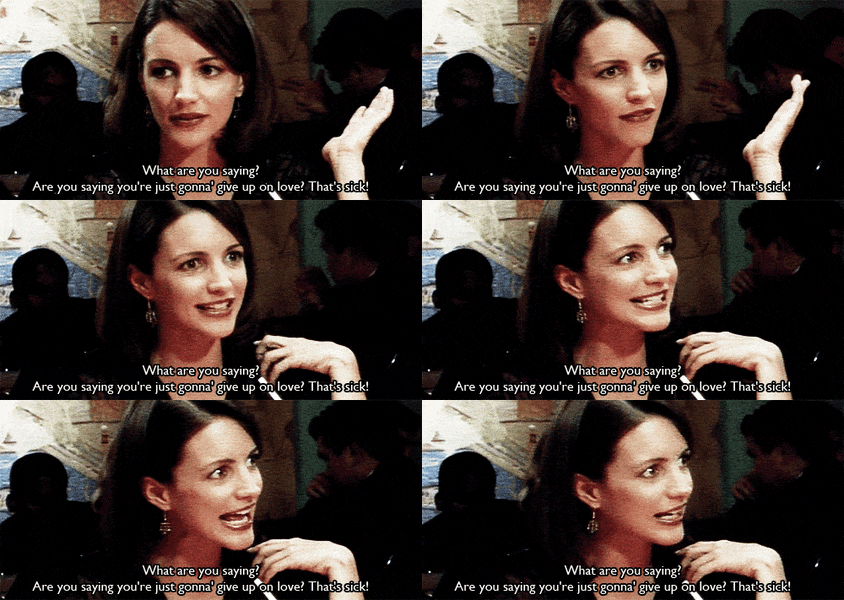
I mean, Parsons! Get it together! You are a woman so it's already difficult for you to make it into the literary canon. You will never get there if you don't include some men! And by that I mean some men who aren't evil. Ones the heroine can fall in love with! You know, This:

Or this:

If you don't want love stories then just make the man the main character. Like this:

You need men, Parsons!!

But then it gets worse. The Countess De Bouville is a widow. Her daughter Adelaide is engaged, but he's not there. Neither is her brother, the current Count De Bouville. Then comes Madame De Nancy, who is in her 20s and also a widow.  She was "sacrificed very early in life to an elderly man, every way unworthy of her," where she "suffered under his tyranny five or six years," died, and "left her the mistress of a large independence." And her sister, Mademoiselle De Bancre, "who had witnessed [Madame De Nancy's] bad treatment from an unworthy husband, determined never to marry."


The sisters live together and seem completely happy on their own. In fact all the women seem completely happy together without men. To the point where they ignore the men at the party completely. "A swarm of beaus surrounded them, but [Matilda] thought their conversation, their fopperies, and fulsome compliments truly disgusting, on comparison with the sensible and elegant manners of her newly-acquired female friends."

No, No, No, Parsons. You aren't getting it. Women NEED men in order to be decent human beings. See?

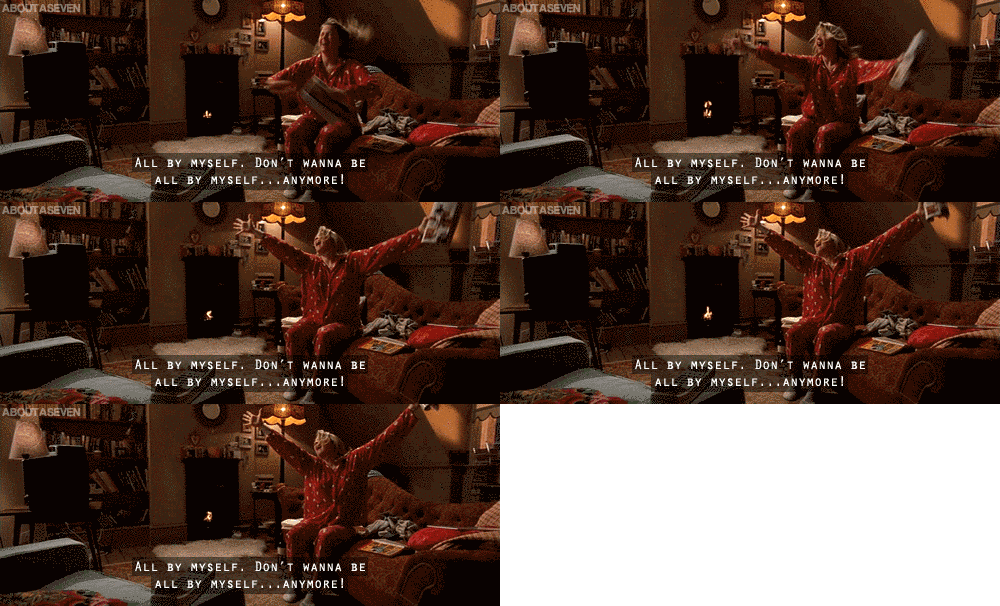
Without them we are just sad beings who sing about how we are all alone in our ugly red pajamas.

Do you understand?!?

Good. We are getting somewhere. You might make literary canon yet.

Okay. I give up. I'm loving this part of the book. It's refreshing.

Thursday, June 5, 2014

"the wretched victim to some merciless man was sacrificed in that closet"

I want to talk about more than just the story of The Castle of Wolfenbach.  Perhaps I really have focused too much on the stories, on the simple joy of reading them, and not said enough about why these stories are important.  I'm going to correct that now.  Strap in.

It has been nearly two weeks since Elliot Rodger killed people in Isla Vista, blaming women for his actions.  In his manifesto he barely gives any detail to women.  They are nameless and faceless.  On the forum that he frequented, PUA Hate, women were discussed objects to be used, that if the woman was not a virgin she should have sex with any man who wants it from her.  The response from women to these murders has been huge, from #YesAllWomen on Twitter to When Women Refuse, a website cataloging instances of violence against women who refuse male advances.  You probably know all of this.

You also probably know about Bring Back Our Girls.  That school girls were abducted in Nigeria by men who hate the idea of educating women.  That the response from the Nigerian government has been despicably slow.  That these girls are being sold as wives for $12.

So what does all this have to do with the Gothic novel?

The line in the title of this post is from Castle of Wolfenbach.  The wretched victim is, of course, a woman.  The heroine, the lady with the fatigue at the beginning of the story, has fainted already.  She has also escaped an uncle who intended to rape her, entered supposedly haunted chambers no one else dared to, and volunteered to move the bloody body of a woman who had her throat slit when the elderly servant was not sure he could lift the body on his own.  It is a story of a young woman fighting to control her own life and escape the man who feels he is entitled to her.  Gothic novels are about women, violence against women, and the heroine's ultimately successful escape from the control of men who would hurt her or force her into sex and marriage against her will.  They are among the first responses of women against male entitlement to women's bodies.

The heroine is usually an orphan or otherwise considered unprotected by society at that time. She does not kick ass.  She does not take on male attributes to win the fight the way modern heroines do. (I do like modern heroines too, but it does seem that in modern stories women are only seen as strong if they are as violent and unemotional as traditional male heroes. Rambo with boobs.)  Gothic heroines are still within the bounds of acceptable femininity of the time, and I make fun of  the fainting fits, but in these stories being emotional is not considered a weakness, but a virtue. They may faint and cry every other page, but this does not stop them from being resourceful and determined, using the abilities they have to find friends and escape tyranny.  And above all, they are brave.  They stand up for themselves, even when threatened with death, and they never doubt that they will eventually escape and all will end well.

We've all talked or heard about how the literary canon is skewed towards men.  Reading gothic novels is part of the reclamation of female literature.  Of the 9 novels mentioned in Northanger Abbey 6 are written by women.  Yes, they are adventures and meant for a mass audience, which is usually frowned upon by literary establishment anyway, but so were the works of Sir Walter Scott, Charles Dickens, James Fennimore Cooper, and Mark Twain and they made it into commonly known literature.  These women writers are as good as their male counterparts.  So why the difference?  I don't think it is just because the writers are women.  After all, there are some women writers just as well known.  I think it has more to do with telling women's stories.  Gothic novels are the stories of captives who escape.  The stories we commonly regard as literature are stories of men's adventures.  If there is a woman, she is the captive to be rescued by the hero.  Even the female authors who make literary canon tell stories of men or rescue by men. Austen has her intelligent and resourceful heroines use their talents to find a man to marry, and Frankenstein is about a man.

If we are going to expand the canon, we are going to have to accept women writers for the stories they write, which are women's stories.  Gothics are what women wrote about being a woman, with the horror of losing control of your own life, though that is made more palatable by the fun story and adventure.  They are good stories.  They are well written stories.  They are stories we need to read as literature and not just for the purpose of reading women's writings as an attempt to be inclusive.  "Women's literature" is its own way of making those writings second class.

As a reader and a writer I believe art is important.  Until we believe adventure stories of women who rescue themselves--which is not a new or modern phenomenon-- are as important as adventure stories of men rescuing women, we will not, as a culture, begin that deep, ingrained transformation that needs to happen.   Gothics are good stories and worth reading.  Let's read them and enjoy them as if they are as good and important as they really are.


Tuesday, June 3, 2014

"there are bloody floors, prison rooms, and scriptions on the windows to make a body's hair stand on end"

Woah it has been a crazy time. Sorry it has been so long since my last post.  My church (and the surrounding town) had its annual fair and I was part of that.
The bit about the tarot card reader---That was me. I'm generally quite shy about saying I read tarot cards, but after years of nagging, I finally got talked into it. Only had one guy who ranted about a tarot reader at a church charity and witchcraft and how I am EVIIIILLL.

 I always enjoy being evil. My greatest delight was the job where some of my coworkers would make the sign of the cross when I went past. Not kidding.

But all of this is not about Castle of Wolfenbach!

It starts off as all good gothic novels should. There is a storm, peasants who must take in a fine lady fatigued with weakening spirits. There is a haunted castle just up the way that is inhabited only by an old couple, left behind as caretakers of this otherwise abandoned place. The peasant wife tries to warn the fine lady of going there by telling terrible and vague stories. And the fine lady feels she must go there because obviously buckets of blood are preferable to a nice, safe peasant cottage with a bed on the floor.

It took Radcliffe an entire volume and too much poetry to get to this sort of scene.

P.S. No one has fainted yet though. C'mon Eliza. Hurry it up!

Thursday, May 29, 2014

Next Read! Castle of Wolfenbach by Eliza Parsons

For one thing, I think it is about time that I actually look into the history of gothic and detective literature.  I'm still all for just reading for pure enjoyment, but I'm getting curious about the history and significance of these novels.

So my next read is The Castle of Wolfenbach by Eliza Parsons and is one of the Northanger Novels.  It was written before The Mysteries of the Udolpho and is more in line with what classic gothic literature is than what Radcliffe wrote.

All I'm hoping for is less poetry.

So you have your proper innocent young thing, running from her incestuous uncle.

Along with masses of bad writing and a story that moves like a racehorse--at least by all accounts, and the typical gothic heroine who faints and cries all the time.  Radcliffe was different in making her heroines more proactive and reasonable and making all seemingly supernatural stuff actually explainable.  This is going to be gothic horror as it normally was and my first foray into the Dan Brown of the age.  I can't wait.


Tuesday, April 15, 2014

Mysteries of the Udolpho by Ann Radcliffe-- Starting Today!

Mysteries of the Udolpho is a roller coaster tale of poor, orphaned Emily St. Aubert who is sent to live with her aunt after her father's tragic death. Her aunt is married to an evil count (of course!), named Montoni, who is bent upon stealing Emily's inheritance and forcing her to marry his pawn, Count Morano, against her will. Alas! She is in love with another, a virtuous and handsome young man named Valancourt, from whom she is ripped away and held prisoner in the Castle of Udolpho. Castles, deaths, inheritances, abductions, imprisonments, ghosts, and escapes, it is by all accounts a heart-pounding, unput-downable read, with a slow start that heightens into a frenzy of suspense and excitement.

It is also quite long, though many (if you read comments on Amazon, Barnes & Noble, and Goodreads) have said that they were so mesmerized they could not put it down and finished it within days. Hope it lives up to the centuries of hype it has garnered. We'll see. Enjoy!!

You can find Mysteries of the Udolpho by Ann Radcliffe:

For Kindle-- Free!-- Here!
For Kindle as part of the Northanger Abbey Horrid Novel Collection-- $0.99-- Here!
For Nook-- $0.99-- Here!
On Project Gutenberg-- Free!-- Here!
On YorkU.ca-- Free!-- Here!
On Classicly-- Free!-- Here!

Monday, April 14, 2014

Requiem for The Literary Gothic

All right, I admit, it is a bit early for a requiem considering the website is still around, but it will not be around for long and posting this after it goes down means that you, Dear Reader, would not have time to go there and look about it some.

It is now a sad ruin of a website. Walls that are crumbling and links that lead to nowhere. And yet, so many authors and novels to explore!


Okay. It is a tad academic for me, and I have no intentions of keeping my list of horrid books confined to one ancient genre. (I'd get bored of bats in belfries, skeletons, and heroines who faint dead away or catch fevers from being out in a bit of rain, wouldn't you?) Still, gothic and other popular page turners of centuries past that I could never get my hands on until now, were what inspired this site and I have to love anything that promoted those sorts of books.

So go look.

Friday, April 11, 2014

Next book on my list

Well, Dear Reader, did you guess?

Of course you did! (Though, because after a few days of blogging I surmise I have no dear readers who have been waiting and guessing the answer, I feel sure that you have come later, are reading this post prior to the earlier post, and are guessing at the question rather than the answer. Well, guess away and we'll call this my version of Gothic Jeopardy.) Where else to begin but where Catherine herself began! The Mysteries of Udolpho by Mrs. Ann Radcliffe!


I wish to start straight away, but, alas! I have no time to do so and therefore am beginning on the 15th of April when tax season ends. And though our hero and Catherine's love, Henry Tilney, declared that he read the work from end to end in a matter of 2 days, I believe, Dear Reader, I do not have the leisure of a gentleman. So as much as I might be engrossed and wish to think of nothing but Udolpho until I have have read every last word, I must go a bit slower than Mr. Tilney. Though if it really is so exciting...


I shall be reporting my progress and every shudder and shock as I read right here, and gossip about the characters. I shall, however, attempt to discuss no true spoilers, and only give such hints as to parts to titillate you, but not destroy your own nerve wracking pace in the book if you decide to read it sometime.


If you have no copy of your own already in your library, then I have a few suggestions as where to find it.

First off, it is available for free on Kindle if you look here.

It is also available for $0.99 as part of the Complete Horrid Novel Collection, also for Kindle, available here. I think this of good value, since it has all 9 of the novels I intend to be reading for much of the next year, and therefore gives you all the works at your immediate disposal.

If instead of a Kindle you have a Nook, do not despair. Though I cannot find the free edition, nor the Complete Horrid Novel Collection, there is a copy of Mysteries of the Udolpho available for $0.99 (still a paltry sum) available here.

If you have neither of such devises, you may still read it on your computer by accessing either pdf or html files at Project Gutenberg, YorkU.ca, and Classicly.com. All of these resources are free.

If you wish to find hard copy, I always recommend the local library or you may attempt to find it at the bookstore or website of your choosing.

Oh my god! I am so excited to begin! Until anon, Dear Reader, all of my most sincere love!